Showing posts with label faith. Show all posts

Friday, September 20, 2013

On Being a Good Person

The benefit for the park was Tuesday night, and I was duly honored. It was lovely. The weather was gorgeous, the Hudson River glittered in the sunset, the food was excellent. The event was sold out, a fact that made me very happy. I am always ridiculously pleased when people contribute to making the world more beautiful, and our park is indeed, a beautiful place.

Siberian elm and asters in fall<br/>Photo by Marcia Garibaldi
The Heather Garden in Fort Tryon Park
Photo from the Fort Tryon Park Trust
To my surprise, both our state senator and soon-to-be city councilman came and stayed for an extended period of time. The senator declared me "an individual worthy of our highest esteem and admiration". The current city councilman's representative said I am "an outstanding individual, one worthy of the esteem of this great city." It's printed up on faux-parchment, so I can gaze upon the words whenever the urge hits. The city proclamation is even framed, with a ribbon and gold-foil seal.

It's moving, but frankly also pretty funny. I mean, how long have you vaguely wanted others to think you are a Good Person? Now I am like the scarecrow from Oz, who thought the problem was that he needed a brain, but found that all he needed was a diploma. I have the documents! It's official! I'm Good! (Heh, heh.)
*        *        *        *

On Saturday I'm teaching a class called "What the Dinosaurs Ate in Fort Tryon Park". I taught this class last year on the day Hurricane Sandy arrived. The rain started to fall just as we finished. The trees started to fall 10 hours later.

If you walk through the park today, the only remnants of the hurricane are 100+ tree stumps. The city was a huge mess at the time, but most of Manhattan has long since recovered. Out in Queens they are still rebuilding. I have to remind myself that there are people who will be rebuilding their lives for years. It's easy to forget that, once your own life has moved on.

The impact of disasters varies from person to person. Big Guy has a friend at his therapeutic school whose father was killed on 9/11. When the towers fell, so did her life. She was five at the time. I think sometimes about this girl's mother, who lost her husband and, in some senses, lost part of her daughter. She probably lost some of her own grounding, too. Putting a life back together is far harder than putting up a Freedom Tower.

To my way of thinking, this is part of why we need to build community, build resourcefulness, build each other up every day. We need to be so deeply in the habit of doing and seeing, of caring and contributing, that it's our default setting. We need to give, not because that makes us Good People or because we get thanks or a proclamation, but because we can.

When we get around to consistently doing what we can because we can, I suspect we'll stop wanting others to think we're Good People... because our hearts will be focused on good itself. Which is, really, far more interesting than the adulation of people around us.



Monday, July 15, 2013

Musings on hard times

Way back when I was single, I took a vacation trip to Spain. My plan was simple: I rented a car in Madrid, and drove until I found a place I wanted to stay. Then I tried to persuade the inn owner to rent a room to a single woman, found a restaurant that would serve a single woman, and went back to the inn to bed.

As I drove south I went through a mountain range. The road was a two-lane highway, and it was only after I had entered a long tunnel that I realized two important things. First, the tunnel was unlit. Second, I didn't know where the headlight switch was on my rental car. Far, far ahead I could see the end of the tunnel.

The question was whether or not I could get there before crashing. I couldn't stop, because a car might come up on me from behind. I couldn't see where the wall was, except by occasionally tapping the brakes to check by dim brake-light.

It was the most terrifying quarter mile I have ever traveled. And when I finally emerged into daylight, the road lacked a shoulder onto which I could pull over so I could heave my guts out. I had no choice but to keep going.

*         *          *          *

I have been feeling glum the past couple of days. The road ahead of me appears very long and dark. It is hard, after having traveled a rough path for a decade with Big Guy, and a long stretch with other woes, to contemplate handling yet more difficulty. The one reason I know I can do it is that I can't afford not to. Like driving in that Spanish tunnel, I don't have any choice but to keep going.

The I-don't-want-to's of life are long and numerous. They easily morph into I-can'ts. But as soon as you say 'I can't', chances are that you're lying to yourself. This is one of the huge benefits of big, big problems: it doesn't matter if you don't want to. You have to. And then you learn that you can.

*         *          *          *

I saw a friend yesterday I haven't seen in a while. She asked how I'm doing, and I replied, "A lot of my prayers these days start with, 'Really, God? I mean... really?'" We laughed. Sort of. She has been through a lot this year, too; I spent a couple of weeks this spring coaching her through her 15yo's hospitalization for depression. It was something helpful I could do. Being helpful gives me joy and a sense of purpose.

*          *         *         *

I am a person of faith. I believe that everything happens for a purpose, yet I don't believe that purpose always has to do with me. The Bible verse that people like to quote in hard time, "For I know the plans I have for you,' declares the LORD, 'plans to prosper you and not to harm you, plans to give you hope and a future'" (Jeremiah 29:11) comes smack in the middle of what God said to a nation that was being exiled to Babylon for 70 years. Yes, exiled for a lifetime. And that promise was made to an entire nation, not to an individual.

Lemme tell ya, bad stuff happened to those exiles. They endured misery until they died. The promise was true -- it just didn't happen to come true in their lifetime. There are times when the greater good subsumes the individual good. There are times we're called on to be the ones who suffer for no currently-visible reason.

It's taken me a while to be okay with that. Hope doesn't necessarily have to be the kind of hope we 21st-century Americans are accustomed to having. We think in terms of personal outcomes and personal goals and personal happiness. If you ever get to the place where you have to let go of all that, it's actually kind of a relief. You can start thinking about having hope in God, rather than hope in what God will do for you. And you start to understand -- just a little bit -- that what's going on here on your section of the face of the earth this week or month or year is neither the beginning nor end of the story.

Saturday, June 8, 2013

Brain cells, manna and zucchini

It's been a quieter week than any in recent memory, quiet enough that I am inclined to take my spare brain cell out of cold storage and see if I can get a synapse going with the remaining functional one in my head.

Brain Cell Plush Doll
Brain cell. I bought my spare at Giantmicrobes.com
After the frenzy of May I have a lull in my workload. That means I'm thinking about what I might do with my life, which direction I should head, what I should write next. This is hubris, of course. I know that other people make and actually execute plans for the future, but that is not how my life goes. When there's a job I'm supposed to do it whacks me in the face. When I make plans of my own something major derails them. I have learned to prioritize flexibility over five-year planning. 

I am mindful that the just-enough just-in-time flow of work that characterizes my professional life is a huge gift. The flip side of it that I have far less control over my life (and budget) than I'd like. Manna is great for a short-term crisis. But after a number of years of it, I'd prefer a different solution. 

*        *        *        *

I've pondered manna a lot in recent years. It's occurred to me that one major challenge for the wilderness generation must've been their perpetually whining children. Never mind that 5 p.m. low blood-sugar meltdown; imagine the daily complaint, "Manna again, Mom?" I imagine  the parental reply was often a bit testy.

You'd think that after a decade or so the kids gave up asking, and that perhaps the parents clued into the fact that their own whining to God sounded a lot like their kids', but this was not the case. We are slow learners, we humans, especially in spiritual matters. Forty years in the desert of day-in, day-out dependence on God for survival might be enough time to trust him day-in and day-out, but probably not. 

I sometimes suspect that Adam and Eve left their spare brain cell behind in the Garden of Eden. You know which one I mean: the one that allowed them to remember the lesson they had been taught.

*        *         *         *

When I was a girl, my dad had a truck garden a few miles from home. The summer I was 17 and had my first full-time job, the family went on vacation without me. I had to tend the garden in their absence. It was a bonanza year for green beans and zucchini, and I picked and hauled home a grocery bag of each daily. Then I sat on the front steps of our suburban home, snapping ends off of beans in the evening, watching the neighborhood or chatting with friends. I'd blanch the beans, let them cool, and put them in freezer bags.

The zucchini were another matter. There are many ways to cook it, and that summer we tried them all. I like zucchini. But after you've had steamed zucchini, baked zucchini, zucchini bread, zucchini casserole, stuffed zucchini  and stewed zucchini, you begin to realize that no matter what you do to it, it's still zucchini. Slice it, dice it, rice it, spice it -- it's zucchini.

There are lots of things in life like that. When I use my spare brain cell, I know there is nutritional value in zucchini, even when you're sick of eating it. There are things we learn when we are forced to go past what we like, past what we want, past what we think we can stand. There are good things we can learn from not-getting our desires, from not-escaping a hard situation, from being pushed into learning 400 ways to cook what we've been given. 

There are things you learn about zucchini that you suspect you could have gotten through life without. There are things you'd rather have not learned.

Perhaps what we want is for zucchini (and manna) to be optional. We appreciate it when we know we need or want it, but only then. The rest of the time it's just zucchini.


Thursday, March 28, 2013

Rambling thoughts about the cross

I've always been fond of Simon of Cyrene. He's the guy who happened to be walking along the road while Jesus was heading out to be crucified, and -- presumably because Jesus was impossibly tired, having already been whipped -- Simon was forced to carry Jesus' heavy cross for a stretch.

I like Simon because his one-line appearance in the Bible tells me that Jesus accepted help from others. Simon moves me past my pride and allows me to nod yes when people step in to ease my load.

I also like Simon because he reminds me that sometimes we're pressed into service to carry crosses other than our own. That's different than being asked to carry someone else's burden, or offering to carry it. Simon was forced, which is sometimes the only way things happen. Surely, if given a choice, he would have stayed far, far away from Roman soldiers and the shame of being associated with criminals.

The third reason I like Simon is that he wasn't a main character. The bigger story unfolds after his cameo (though one imagines that, within his family, the story of great-grandpa's 15 seconds of fame was passed down with more color).  I'm no major player, either. I do what I can (or must), and it's rather a comfort that while I'm important in some way to the story, the outcome does not rely on me.

*             *             *               *

There's something poetic about the phrase "take up your cross and follow me". It's motivating, inspirational, can-do: Yes! I will!

Of course, there's the matter of figuring out what your cross actually is. There's a tendency these days to speak of traffic jams, annoying colleagues and dirty diapers as crosses, as if Jesus said, "Endure your inconveniences, and follow me". But I rather suspect that taking up the cross involves more suffering than the 45-second delay the old lady ahead of you at the ATM causes.

Crosses are orders of magnitude more than unpleasant: they're repulsive. You do not want one, it is not easy to take up, and it's even harder to slog down the endless road to Calvary with one digging into your shoulder. Crosses put you in the position of focusing on only the next step, of living through the next moment, of doing whatever the next thing it is that you have to do. With a cross, you can't necessarily see how it will turn out; in the darkness, you do not know for certain that there is light ahead. You have to trust that it is there, even if only on the other side of death.

*             *             *               *

Each of us has inner secrets and insecurities we do not want the world to discover. I suspect there is a direct relationship between these secrets and who we aspire to be. Perhaps we are afraid we are incompetent, so we protect that secret, yearning to be someone we think we are not. Or, from the flip side, perhaps we yearn to be thought of as solid Christians, and writhe in the knowledge that we're not as faith-filled as others think.

This morning I was toying with the idea that perhaps our insecurities are directly related to our crosses. Not in the sense of looking at our insecurities as our crosses, because that could lead to saying, "Oh, I'm an anxious person and I just have to live with that". (We can, after all, pick up and carry the burden of our faults around for a lifetime, without ever being the better for it.) I'm thinking more along the lines that our insecurities point out what it is we need to die to.

Ponder that one with me, and tell me what you think.


Sunday, August 5, 2012

Time and time again

Suddenly it feels like summer is over. There's still a month left before school starts, of course, but the final stretch is previewing in my head in fast motion. There are school supplies and shoes to buy, dental appointments, and emotions of anxious kids to calm. Oh -- and the minor matter (!) of where Little Guy will get educated.

I've always thought it odd that time can feel condensed or rushed or slow and yet tick along systematically. When I was young, I thought this made clock-time peevishly deceptive. Somewhere in my mid-20s I got annoyed enough at clock-time that I decided not to structure my life around it. (It's possible this choice was influenced by a story I read when I was about 12, in which a boy in WWII trained himself to wake up at whatever time he needed to be up. I thought that was very cool.)

So back in the days when people wore watches, I didn't. I didn't want to strap my life to a timepiece. I did keep a clock on my desk so I wasn't late for meetings, but I rarely looked at it. Instead I became very, very good at sensing how much time had elapsed. I found that not-thinking about the tick-tock gave me greater concentration and creativity.

Somewhere I learned that the Greeks had two distinct words for time: chronos and kairos. Chronos is the chronological, measurable stuff. Kairos is the outside-of-time time we enter when we call up a memory that is as rich and real as the event itself. If you fall into a reverie and re-experience what it was like to hold your baby for the first time, or are practically there in the warm kitchen eating cookies with your grandmother, you're probably closer to kairos than chronos. You're remembering in the sense of re-membering, re-uniting. And it's real. It's more than just a story stored in your data banks: it's as if you've re-entered a time outside of time.

In theology, kairos means the time in which God acts. It's the intersection of the temporal and eternal. I like that. I like it a lot.

But I still have to make another trip to Staples for school supplies.

Friday, May 18, 2012

Trash, spam and life

I was cleaning out the Trash folder in my Gmail account, and got to musing about that "Delete forever" button. Wouldn't you like to have a personal, portable one for dealing with aggravating situations? Wouldn't it be nice to just tap your index finger and click! make frustrating people vanish?

Click! You are spam!
Click! I have the power to color you puce!
Click! Off you go into your own folder (which maybe I'll open next month)!

Ahhh, yes.

But my inner moralist protested, and I grudgingly halted the daydream. People aren't trash (yes, yes -- I know). And we shouldn't label them (yes, yes). And... and can I make  a subtle index-finger motion anyway when I run into someone who's particularly exasperating? Yes. Because here's the thing: turning the aggravation into something silly makes me smile, which pacifies my heart, which makes it easier for frustration to slide on by instead of getting stuck.

*        *         *          *         *

In the course of my life (and thus, I assume, in the course of everyone else's, though of course that could be a flagrant and patently untrue extrapolation) I've realized that many of the big shifts in my thinking have come from little things others have said -- usually in passing -- that have burrowed into my heart. Like this:

It's hard to allow other people to change.

I'm guessing this was said to me two decades ago, and I'm still chewing on it. Sometimes I'm slow to change, myself.

But I think this statement is true. Once we intentionally file someone in Spam, we rarely go back and click Not Spam. When we decide someone is a jerk or a slob or incompetent, it's as if we've put on special jerk/slob/incompetence-finding spectacles, and we're guaranteed to see every possible manifestation of jerkiness, sloppiness and incompetence there is. After a while that's all we see or remember. The label we've applied dismisses the person's positive facets as automatically as Gmail swishes suspected spam out of our Inbox.

And then, if and when we notice that the person has been a little less jerky or sloppy or incompetent, we assume it's an aberration instead of a trend. We think That's more like it!, and don't take the time to comment upon it.

But if someone (like me) is working hard to overcome a flaw, it helps when others notice. It helps to hear a kind word of encouragement.

And if someone (like me) accidentally does the right thing for a change, hearing how pleased people are makes me far more likely to try to do that good thing again.

*        *         *          *         *

For two years Snuggler came home from co-op complaining that Tom (not his real name) was annoying. She couldn't stand him. This is a kid you've met, even if you haven't: loud, poor sense of boundaries, easily distracted, makes bad jokes. He interrupted class, was disruptive at play rehearsal, was constantly in trouble. I once sat next to his mom at an event where the kids had to pair up, and Tom was the only one without a partner. The mom grieved aloud, "No one likes my kid!" My heart ached for her: I've been the mom of the problem kid in the room, and it's a really rotten role.

Early this year Tom was getting on Snuggler's nerves so badly that I suggested she pray for him and try to make him into a friend. When her lengthy moan of, "Moooooooooooom!" ended, she actually set about doing what I suggested. Miracles happen.

And y'know, miracles really did happen. Snuggler started noticing good things about Tom -- and mentioned them to him. She complimented his writing when it was good. She stuck up for him during free time at play rehearsal, and the two of them got to talking. Snuggler started to see that Tom was quick to admit when he'd been wrong, and quick to apologize. And not all kids are like that. She realized that when she said calmly, "That's really annoying; would you stop?" he did stop. Not all boys do. She began to recognize that the way in which Tom saw the world had color and shape and shadow that was unusual and interesting. And she began to like him.

Tom is no longer in the Spam or Trash folder of Snuggler's life. The transfer to her Inbox wasn't because he changed. It happened because Snuggler took off her annoyance-finding spectacles, and started to see and appreciate different things about him.

That's hard to do. I hope I grow up to be like my kid.


Saturday, April 21, 2012

Stimulating creativity

Snuggler's been asking to watch TED talks with me in the evenings. It's a nice cozy thing to do: sit on the sofa with my girl and learn new stuff. We've seen my favorite Brene Brown talk, a humorous piece on book-cover design, and a talk on creativity. We listened to Abigail Washburn sing hillbilly Chinese on the banjo and heard Itay Talgam discuss leadership styles of conductors. The other night I clicked on How Do We Heal Medicine? by Atul Gawande. Snuggler was skeptical of the title, but once it got going she was absorbed -- and impressed.

I love anything that makes my kids' brains -- and mine -- stretch in new ways. Because while it's fun to know factoids and useful to absorb information, it's the thinking part of learning that is exciting. I want to raise thinking kids. More than that, I want to raise a thinking me.

*       *        *        *

No matter what my primary interests may be, tangental and seemingly unrelated ideas are often surprisingly helpful thought-fodder. Last year when I read Gawande's book about checklists, it seemed to have a ton of implications for parenting. Reading up on how we make choices has affected my faith and everyday life.

Like everyone else, I trend in the direction of my tastes. I am oh-too-capable of living in a world of my preferences, of stuffing my brain with marginally interesting input. But filling my mental databases doesn't necessarily spur me on to anything new or take me anywhere different.

The times I grow are usually correlated to when I'm given a jolt from an unexpected direction. Which is why I've tried to develop the habit of reading books on topics I know nothing about, watching lectures by people I've never heard of, and occasionally even opening -- and reading and thinking about -- links supplied by my other-end-of-the-political-spectrum Facebook friends. 

*       *        *        *

One day I had to go down to the ballet studio, and while I was there I read Twyla Tharp's fabulous book, The Creative Habit. A couple of moms wandered over -- one is a pediatrician, the other a professor -- and asked about it. I raved about what good ideas it has about how to be consistently creative. They looked at me blankly. 

It took a while to dawn on me that these moms don't think of themselves as creative people. I was shocked. I mean, what's the alternative? To simply consume? To exist? To plod? We're all creative. We have to come up with solutions to problems, no? We're all part of creating a better community, creating ourselves into better people, creating lives of worth and meaning. Which means it behooves us to think about what we can do to become more adept at all those things. Maybe TED talks aren't the entire answer. But I daresay they help.


Wednesday, April 18, 2012

Finding joy

There are a handful of blogs I loosely follow for work-related reasons. Today I read a piece at Her.meneutics about Kay Warren's new book, and loved this quote:
"Happiness is built on happenings,” Warren told me. “Joy, on the other hand, is about connecting the eternal to the internal so that we can interpret our externals in ways that allow us to say, ‘everything around me may not be all right—but I’m all right."
Yes. Oh, yes. That's what I was trying to say in my post on Cathedral Parenting. But I think she said it more succinctly.

*       *        *         *        *

I have a college reunion coming up. For the first time ever I wrote something to be included in the class Record Book. I had to think hard about how to allocate my 500 words, especially since I've been mute for decades. (Yeah -- me, mute. What's with that?)

One of the unexpected benefits of middle age is that the compulsion to prove something mellows. Most of us have discovered that the real story isn't about job titles and awards, but about facing down difficulty and learning to find joy anyway. On some level we've all succeeded in life, and on some level we've failed. Only part of that is on one's resume. The rest of it is in the you-ness of you.

Wednesday, April 11, 2012

Different kinds of problems

At our moms group today we talked about how there are two kinds of problems our kids have:
  • those that we're supposed to do something about, and
  • those that give us information 
In the first category go things like health issues, learning disabilities, social difficulties that we can guide kids through, anything that we can make an appointment for.

The second category sneaks up on you. In the earlier years of parenting most of us didn't even know it existed. It consists of the stuff that we initially see as behavior problems and finally realize is something else. It's the amorphous stuff that causes suffering, the stuff we look at and think (or pray) in confusion, "Show me what's going on here."

And then something happens (usually something we normally think of as bad) and our eyes open and we realize, Oh -- this is the answer to my prayer. This is the heart-issue, the character flaw, the tendency that my child will eventually have to deal with himself. This is what I need to know in order to be a better parent.

It's suddenly clear that this isn't a Mom-will-solve-it issue or a matter of bandaids or finding good resources or doing things 'right'. It's not about whether we've set our family rules clearly enough or imposed strict enough consequences. It's about the deeper soul issues in our children, the things that will make it harder for them to grow up to be peace-filled or thankful or generous of heart or forgiving or humble when they make mistakes or firm in the face of conflict.

It's good to know those things. Not easy, but good.


Sunday, April 8, 2012

Triduum

Thursday
On the day before Passover my friend Liz arrives with her granny cart filled with chametz. (I want that granny cart: it has a smooth ride, is easy to turn, and has thick padding on the handlebars. Liz says it's from Costco.) Our refrigerator and pantry are filled with leaven-tainted items ranging from potato starch to pasta to a quart of soy sauce. There's a box of chocolate pudding mix (a novelty here), flour, a bottle of vanilla extract, nuts, Cheerios, bulgur wheat, half a bottle of Pinot Grigio, frozen chicken broth, one frozen salmon cake, a large quantity of mustard, and (for some reason) an unopened box of matzoh. We love matzoh.

I wish Liz a good Pesach. She wishes me a happy Easter. There's wonderful symbolism somewhere in this annual passing-on of Liz's chametz, but I'm not sure what it is, and instead choose to rest in the pleasure that a friend has given me what she cannot use.

Friday
As I had my "quiet coffee" at 5:30 a.m., I mentally made my to-do list for the day: finish Eldest's financial aid forms (essential), write two more pieces for DG 2014 (due Monday), begin editing a master's thesis on music therapy (draft due Monday), write my April posts for Seeds of Devotion (at least one by Monday), and go grocery shopping/clean the house/prepare for Easter dinner. And oh, right -- it's Good Friday.

Tell me that's all going to happen.

I look at my impossible list and the first thing that pops to mind is that church is not technically required. But a voice in my head whispers, You say that you put faith first. Do you? I wince and wrench my attention away from the gotta-get-it-dones, thinking that Martha and Mary must've squabbled a lot as kids.  I re-organize my day around having 2:45-5pm free.

That settled, I write a blog post and head out to Trader Joe's. It's a train ride away. En route I read a bit of The Hare With Amber Eyes, a quirky book about the Ephrussi family and its collection of 264 netsuke. It's not devotional reading, but I don't feel compelled to force-feed my heart. I know where my day is centered.

*        *        *       *        *

Home again, I ask my two youngest to dust the living and dining rooms. I ask with hidden trepidation; I expect a battle. To my surprise, the kids cooperate cheerfully. They ask if they can put on some music and I say okay, thinking they'll choose something upbeat. It turns out that the disk already in the CD player is Mozart. The kids are surprised, but leave it on. I work with a smile, liberated from the oppression of feeling I am alone in my housecleaning.

*        *        *       *        *

Same day: Dancer asks, patiently, for about the 80th time, when she can open a bank account. I look at the clock and agree to take her. On the way out the door I remember to bring the medical form that needs to be notarized. In 30 minutes we have finished at the bank and are home. Good call: I check off two things I'd forgotten were on my to-do list.

I head to church. It is, fittingly, on top of a large hill. As I trudge up, I remember I need to make a lab appointment for Big Guy. Miraculously, the number to the lab is in my cell phone, and a few minutes later I have checked yet another forgotten item off my to-do list.

*        *        *       *        *

I am caught off-guard by the intimacy of venerating the cross, and cry.

Saturday

Up at dawn, I write my pieces for DG 2014, make pesto with which to marinate Sunday's lamb, and clean out space in the refrigerator for leftovers-to-come. The day is given over to housecleaning  and baking, but I manage to slip in a quick review of the master's thesis.

In the evening, Dancer and Snuggler and I head downtown to go to the Easter Vigil. We go to the church where Eldest used to sing in the youth choir, knowing the music will be splendid and the preaching good. It is curious to stand on the street in the middle of the theater district as the Paschal candle is lit; tour buses pass, neon flashes, and people rush to get to their shows.

Indoors, during the blessing of the candle they sing:
On this, your night of grace, O holy Father, accept this candle, a solemn offering, the work of bees and of your servants’ hands…
I grin at the  bees but I muse, A candle's a pretty lame gift to sing about! And then I'm caught up short by the thought that everything we can give is pretty lame. I mean, we're talking about the God of all creation, who made the distant stars and amoebas and green peppers, the God who created everything. What could we possibly give that's worth anything? When I look at it that way, a candle is as meaningful as anything else, because the only way it has any significance is because we're dedicating it to God, and He can transform its meaning.  


Sunday
The house is miraculously clean, but then the tub backs up with black crud, curtailing morning showers. I figure none of our dinner guests will be using the bathtub; this problem can be solved at a later date.  We have another family coming over (three kids), our beloved Miss Dober (godmother to a couple of my  children) and a homeschooling friend whose kids are away with her ex-husband for the holiday. With 13 people to seat, Andrew goes to a neighbor to borrow chairs.

We have a fabulous dinner, with Dancer's ginger spice cake and lime tarte for dessert. Everyone gets along. Our guests laugh and seem to enjoy themselves. I am ridiculously happy: happy to be able to share this most wonderful day and to offer others hospitality. I feel free. This is the first time in eight years that Big Guy has been stable enough for us to invite guests in quantity. I take this luxury -- the extravagance of being able to bring people into my home -- and tuck it in my heart to treasure on days when life is more limited.

We call Eldest and wish her a happy Easter. I wish you one, too.


Thursday, February 2, 2012

In which I go all theological on you

I'm a big believer in paying attention to the good things in life. Not because I'm a Pollyanna, but because I'm not: there are times when negative emotions will grab your life and run with it, if you let them. The way to stop that is to work at seeing -- and remembering -- the good stuff in each day. After all, it's there. Somewhere.

Most days, taking note of the positives adds enough perspective to tone the negatives down to a manageable level. This is true even when you've got a 15 year old in Major Depression with no health insurance, an unemployed husband, uncertainty over where your kids will go to school, perplexity over how you're going to make ends meet, and the emotional tenor of the family seems to vary between frazzled and freaked out.

But this past week remembering the good things wasn't enough, and I had a handful of rough days. Bleak, dark, heavy days. Days when it seemed like the troubles were endless and insolvable and I was going to crack. One morning I said,"Lord, I feel like I've forgotten how to succeed." I got an answer to that right away. It was, "That's okay. There are other things you can learn now."

Sigh.

This is why faith is good for you. In its own weird way, it helps.

On top of everything else on my plate, on February first I was scheduled for jury duty. I haven't had to go since I sat on a Federal jury for three solid months, back when I was single. But since we won't be homeschooling next year, I didn't feel I could ask for an exemption. So I was planning on serving... up until last Thursday, when I realized that this was a really, really bad time to lose a couple of days. I went online to reschedule, only to discover that I needed to have postponed a week in advance. Missed it by a day.

The church, not the court
Andrew told me I could still go in person to postpone, so on Wednesday I dragged myself downtown to the Supreme Court building. I was almost there when I realized a) I was 15 minutes early, and b) a lovely church was nearby. I detoured to the church, which is one about which I have particular memories, and went in for ten minutes. It was so unbelievably quiet that the silence muffled even the cacophony in my head.

I sat in a pew and stared rather blankly at the front of the church, letting nothing fill my mind. It was great. It was like breathing again. After a while my eyes started to focus, and this is what I saw:


I mused for a bit on how, when one looks at a cross, one sees different things at different times. If you are Protestant and look at a crucifix, you are struck by how stark and uncomfortable it is. If you are a Catholic and look at a plain cross, you are struck by its emptiness. And on this morning I was struck by the shadows. For look: the shadows are different than the cross itself.

I looked at the shadows, and realized that though the shadows were created by the crucifix, they were actually a lumpy shape. They were related, but not the same. And I wondered how many times we think we have our eyes fixed fully on Christ and instead are focused on his shadow. We're close, but not as close as we think.

I wondered how many times we try to take up the shadow of our crosses instead of the crosses we're given, and then we wonder why we struggle.

I wondered at how many things there are to wonder about with the cross, while it hangs there: silent, waiting, hoping, blessing.

And then I smiled in the silence, and said a prayer, and went off to wait in line to see the County Clerk to postpone my jury duty. And instead of feeling like I'd crammed something else into my day, I felt as if the world was light again. And there was hope.


Thursday, May 12, 2011

Another blog

A couple of months ago Guideposts asked me to blog for them about devotional practices. For those of you who are interested, the pieces generally go up on Wednesdays. This week's entry is How Focusing on the "Bright Spot" Helps Prayer and Devotion.

Saturday, April 23, 2011

Black ships before boys

Andrew began reading Black Ships Before Troy to Little Guy last night. It's Rosemary Sutcliff's re-telling of the Iliad, and Rosemary Sutcliff is wonderful. But it was Good Friday, and I half-wondered if this was the most appropriate thing to read.

This is the out-of-print edition we have. It has great illustrations

The story begins with Aphrodite promising Paris a wife as fair as she is, if only he tosses the golden apple to her instead of to Athene or Hera. Then Paris neglects Oenone, and sails to the palace of King Menelaus to see fair Helen.

As Andrew read of how Paris and Helen exchanged glances at each other, and walked together in the cool olive gardens, Little Guy began to look uneasy. He glanced at me, and then back at the book. And in his eyes I could see that he knew trouble was coming. And he didn't like it.

I was sitting nearby and said something like, "Don't worry, no one is sitting at my feet whispering sweet nothings as I spin my violet wool when Daddy is out hunting."

And my littlest one smiled, but I could see the shadow in his eyes. Do people really DO things like that? Why?

You don't have to tell a seven year old that stealing someone else's wife is wrong. Kids are the pool through which adult failures-to-behave ripple. They know. They see clearly what we, after watching so many shows where betrayal or greed or self-centeredness are mere plot elements, gloss over: real people get hurt.

Seeing the bewilderment wash over my child's face was a reminder: we can't allow ourselves to become inured to stories about desire so strong it launches a thousand ships. We should ponder those stories, shudder at them, consider what it means to give in to our ambitions, cravings, covetousness, snarkiness and other urges. We can acknowledge that lots of human beings do outrageously cruddy things without concluding it's not so bad if I act like that.

Yeah, it is that bad. Sorry.

And as I thought about this, and snuggled my boy as he went to sleep, I realized that Black Ships Before Troy wasn't such a bad book to read on Good Friday. For understanding how our sins play out in the lives of others is a first step toward understanding how Jesus got on that cross.

Thursday, March 17, 2011

A new blog

For those of you who are faith oriented, I've been asked to blog over at Guideposts on the devotional life. The blog is called Seeds of Devotion, and will be updated weekly. There are two pieces up now, more to come.

Saturday, March 12, 2011

Making waves

This morning I looked at the online news coverage of what's happening in Japan. I was struck by one photo of a father holding his son's hand; their backs were to the camera, as the two looked out on the utter wreckage of what had been their neighborhood. And a cry rose up within me: WHY? I shook my fist at God, and was very sad and thoughtful for a while.
Then I thought at least I could say a prayer for that boy, and another one for his father. So I did.

And then I thought I could go back through the photos on the news web site, and say a prayer for each of the people I saw. So I did.

My brain gets stupid when I'm upset, so when I'm unfocused I revert to the prayer that Jesus taught, the one folks call the Lord's Prayer. My brain can stay on track with that. If it doesn't, it's easy to pick up where I left off, or start again. I can say it many times, and it doesn't lose meaning. 

A while later I thought about how many people have died (I think the estimate now is 1500), and I thought that each one of those people has a mother or father or a child somewhere, who also needs prayers.

But praying for all those people one person at a time would take a very long time. Probably as long as it takes to clean up from the tsunami.

And I thought, I don't have that much stamina. My heart isn't that big. Sadly, that's true.

And then I thought, But even a tsunami is made up of drops of water. And I'm not the only one who can contribute to a wave of prayer. 

So I'm putting it out there for you. The people of Japan are going to be suffering for days and months and years. Get out your wallet and contribute to whatever relief organization you prefer. Then choose a number of people to pray for, any number. Choose a length of time, however long you think you can sustain it. Get started. Keep going. Steal this post, and pass it on.

Thursday, December 23, 2010

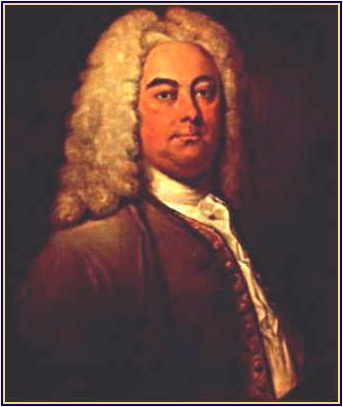
Handel's Messiah and parenting

A friend gave us tickets to see Messiah last night, done by a superb chorus. Box seats, no less! It was a major treat, in more ways than one.

As I sat listening to the music twine familiar words into glorious patterns, I thought about how the oratorio repeats phrases in different ways, with some voices coming in from above, while others rumble in unexpectedly from below. Whole minutes and a myriad of notes were devoted to the two words comfort ye. The pile-on of voices in He shall purify brings us a little bit closer to understanding with each repetition. And after a soul-floating stretch of hearing Unto us a child is born tossed back and forth between sopranos and basses and altos and tenors it dawned on me that there is a great deal to learn about how we absorb words and what parenting is about by listening to Messiah.

I heard the words Unto us a child is born at least once a year since I was a child. I've read them in the Bible, and I know the back story. And yet listening to them sung in a glorious concert hall by an excellent choir, they worm their way into my heart in a new way. They come at me from different angles, and in their persistence and echoes and variations of voice, I start to absorb them all over again. I begin to grasp them for what they are.

Think about it: when you became a parent, the words you put on the birth announcement (Susan Smith, 7 pounds, 9 ounces) came nowhere near to the world-changing fact that Susan Smith had arrived and changed your life forever. If you pull yourself back in time and re-live the first time you held your baby, you'll know Handel had it right: Unto us a child is born needs to echo and resound in different pitches for a very long time. The older your child is, the greater the song in your heart -- if you pause and reflect and let it emerge.

And here is where I think Handel's interweaving of words and song can help us as parents: If you could reduce all that your child means to you to three Playbill-size pages of lyrics, and you were to put those to music, you wouldn't sing each word once.

  • How many different ways would you voice "I love you"?
  • How often would you repeat "You make this world a bigger and better place"?
  • How would you weave "You are breathtakingly precious to me" throughout your piece?

We human beings don't learn by hearing something once. We don't absorb things fully by being exposed to knowledge in just one way. Whatever themes we want our children to grasp -- whether it's our views on human relationships or simply how much we love them -- we need to weave those into the very fabric of our (and their) lives. We do this by composing our lives so they contain the melody of the big things we believe in.

Here's hoping your composition becomes a masterwork.

Merry Christmas.

Wednesday, December 15, 2010

Prayer

I've been getting up early this week because Eldest is in the midst of final exams, and I promised to pray for her. I suppose that might hint of asking to win a football game or battle -- whose side is God on? -- but I've simply asked that she have a clear head and a calm heart. No magic answers, no miraculous influx of knowledge. Just the ability to use what she knows.

I'm not fond of the view of God as a magician, who waves His magic wand and makes problems go away. Nor do I care for the image of God as Santa, someone grants every deep-seated wish if you're good. And don't get me started on God as Superman, the hero who will swoop in to avert danger and bosh the bad guys.

If God is really God, He can do anything a magician or Santa or Superman can do, and then some. To limit Him to being an ace-in-the-hole supernatural lackey whose job is to make my world comfy seems a bit ridiculous: someone who created 400,000 different kinds of beetles and 170 billion galaxies almost certainly has a far more sophisticated understanding of what's really needed in any given situation than I do. That doesn't mean I am insignificant, or that my needs don't matter. It means that my personal view of what's important/tragic/needed won't consistently map up correctly with the bigger picture. 'No' is always a legitimate answer, even if I don't see why, and even if I don't like it.

So I don't think the main point of prayer is to persuade God to come over to my point of view. If there's persuading to be done, it's quite likely I'm the one needs to shift positions. Prayer is about articulating, as best I can, a yearning of the heart, and directing and offering it to someone who can either do something about it or who can change my perspective. There's only one way to start that process: with communication. Which is why I pray.


P.S. Eldest texted to say she's done! She's coming home tomorrow.